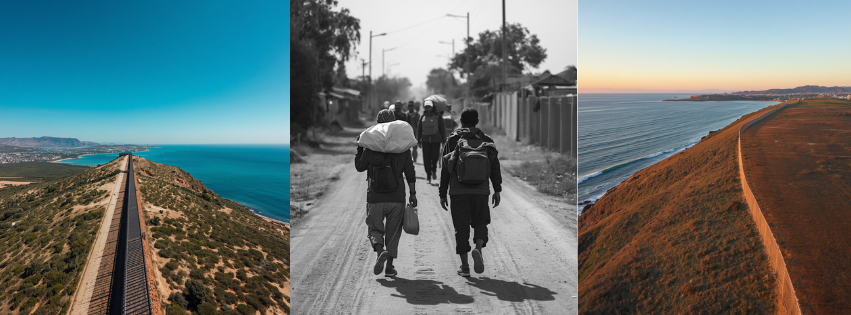
Ceuta has re-emerged as one of the most pressured and symbolically important border points in the migration landscape between North Africa and Europe. Recent reporting highlights a dramatic increase in attempted crossings into the Spanish enclave, with figures rising by more than 300%. While these numbers may appear sudden, they are actually part of a longer and more complex pattern of shifting migration routes across the western Mediterranean
ALSO READ: Online Webinar Recap – Our Projects, Our Process, and What Comes Next
This increase is not happening in isolation. It reflects a wider reality: migration routes are not fixed. They respond constantly to changes in border enforcement, geography, weather conditions, political agreements, and access to safer alternatives. When one route becomes more controlled or more dangerous, movement does not stop. Instead, it shifts.
In recent periods, tighter controls and increased surveillance in other crossing areas have contributed to a redirection of movement toward Ceuta. This has resulted in more people attempting dangerous sea crossings or trying to scale heavily fortified border fences separating the enclave from Morocco. These are not random or spontaneous decisions. They are shaped by limited options and the absence of safe, legal pathways for movement.
On arrival, the situation in Ceuta becomes even more complex. Reception systems are under significant strain, with overcrowding reported in processing and holding facilities. This creates operational pressure for authorities and prolonged uncertainty for those arriving. In such environments, migrants may experience instability, restricted access to services, and heightened vulnerability.
ALSO READ: Undocumented Labour and Morocco’s Agricultural Dependency
It is important to understand that behind each recorded “crossing” or “arrival” is a human story. These figures represent individuals and families navigating extremely difficult circumstances—often leaving behind conflict, economic hardship, environmental stress, or lack of opportunity. The decision to attempt such crossings is rarely made without risk awareness. Rather, it reflects a situation where perceived risks at home are outweighed by the hope of safety or stability elsewhere.
Ceuta’s current situation also illustrates a broader structural issue in global migration systems. Rather than being resolved, migration pressure is redistributed. When enforcement increases in one area, routes adapt and shift geographically. This creates a continuous cycle where borders become dynamic pressure points rather than fixed barriers.
The broader implication is clear: migration cannot be understood solely through enforcement or containment. It is shaped by global inequality, conflict dynamics, climate pressures, and the uneven availability of legal mobility pathways. Without addressing these root causes and expanding safe routes, movement will continue to adapt and find new pathways.
Ceuta, therefore, is not an isolated case. It is a reflection of a wider system in motion—one where routes change, but the underlying drivers remain consistent.
Sign the petition to end illegal pushbacks affecting migrants along the Western Mediterranean route.